New Grad Spotlight: Tom Carnegie (BPAPM/18)
Policy Analyst & Urbanist

Tom Carnegie is an Ottawa-based policy analyst with a passion for developing impactful environmental and social programs. During his time in Carleton’s Bachelor of Public Affairs and Policy Management (PAPM) program, Tom was involved as the Vice-President of Communications with the Arthur Kroeger College Educational Students’ Society (AKCESS), was a facilitator and vice-head during Fall Orientation, and participated as a delegate at Carleton Model Parliament.
Hey Tom! What have you been up to since graduating from Carleton’s PAPM program?
Once I graduated, I joined Environment & Climate Change Canada’s (ECCC) Science & Technology Branch as a Junior Policy Analyst, working for the same team I had worked on for the past three years as a student. We supported research in finding funding to support the government’s priorities.
From there, I was then recruited to join the Climate Change Branch of ECCC to develop programming to return the proceeds collected from the federal price on carbon pollution. I focused on programming targeted to reduce emissions from large industrial facilities.
After finishing the development of the program, I decided that I wanted to go back to university, and I decided to pursue a master’s degree in urban studies. After the master’s degree, I stayed in Belgium for a year, honing my French. This summer, I moved back to Ottawa, joining the National Capital Commission’s (NCC) Public, Legal, and Corporate Affairs Branch, where I support the strategic planning of our investments and facilitate the implementation of the 50-year master plan for the National Capital Region.
You decided to move across the world to pursue further education after your degree at Carleton. What was that experience like?
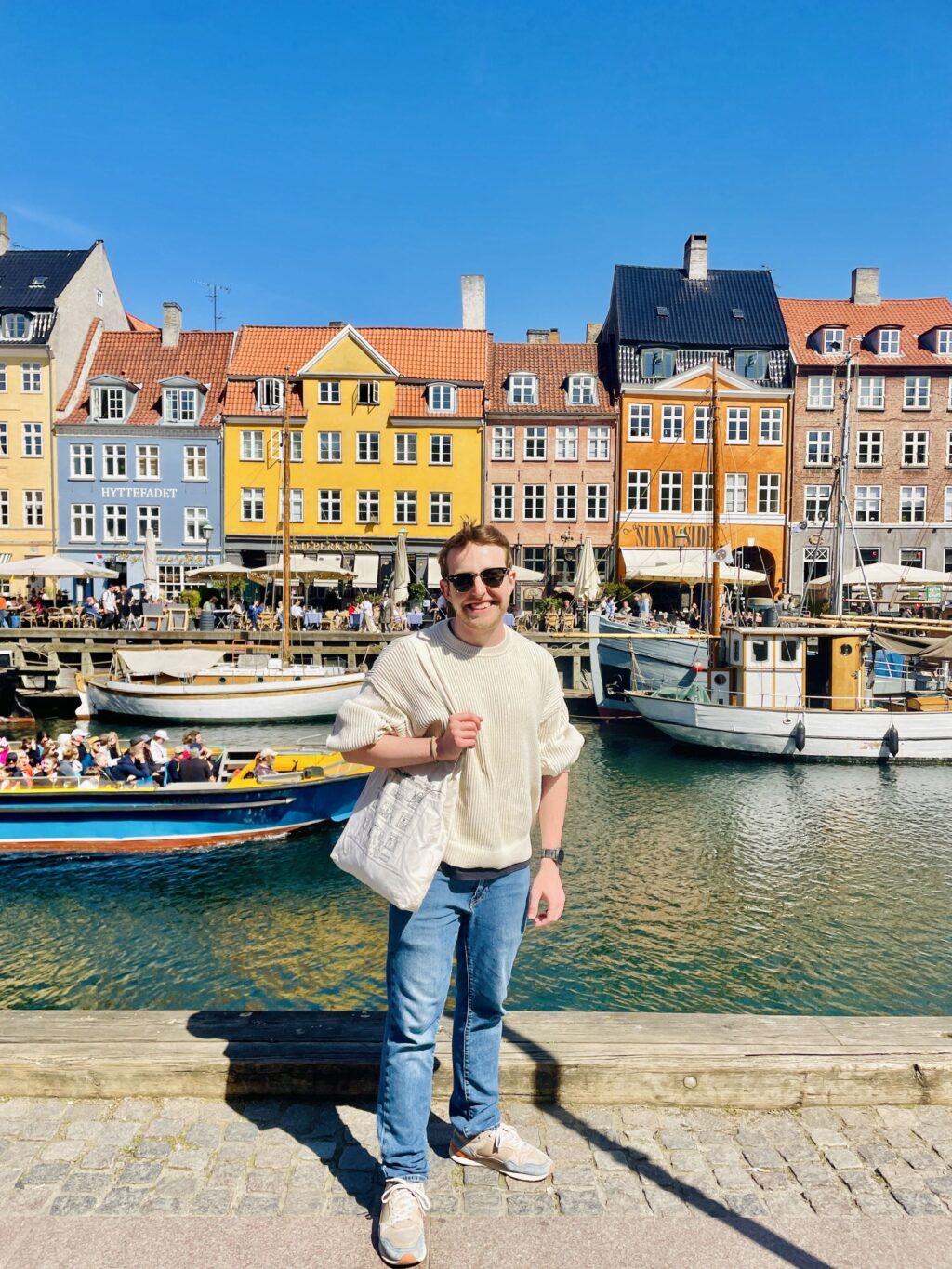
I pursued the 4CITIES master’s degree in urban studies, which is a joint master’s degree supported by the European Union and delivered through six different universities in Europe, where I studied for one semester each in Brussels, Vienna, Copenhagen, and Madrid. I was originally motivated to do my master’s degree abroad because of the amazing experience I had during my time on exchange at Carleton when I spent a semester in Melbourne, Australia. I wanted to do my master’s degree in urban studies to learn about a new subject where I could still apply my policy skills. I wanted to learn from some of the best cities in the world which in my opinion, are in Europe. When I first learned about this program, I was equally excited about the opportunity it presented and terrified by the challenge of moving every six months to a new country where I didn’t speak the language.
It made for an incredible academic and intercultural experience. Not only by adapting to the very different cultures in each of the four cities we studied in but also by learning from the experiences of our student cohort. Together we were 40 students coming from 22 different countries, all from very different educational backgrounds and disciplines.
Tell us about your time at Carleton. Did any specific memories have a lasting impact on you?
I was first drawn to PAPM because of the interdisciplinary curriculum. I was very excited to be learning about policy development from a variety of different lenses and perspectives. I really appreciate that PAPM was able to give me both the technical and procedural know-how of policy making, combined with an interdisciplinary perspective that helps me to make more well-rounded and informed advice when crafting policies. Beyond the academic experience, I loved how the tight-knit, small program brought us together.
Today, my best friends are still those that I met in PAPM.
I had the honour of meeting the late Senator Murray Sinclair when he invited my social policy seminar class to the Senate of Canada to speak with us about how we can facilitate reconciliation in all aspects of policymaking. He reminded us that there are no shortcuts to reconciliation and that it must be a commitment that we continue to make every day of our lives and careers. Many of his words stick with me today and guide my actions toward reconciliation. He was a great Indigenous leader and a beacon of light for all Canadians.
Some recent grads feel pressured to have it all figured out right away. What advice would you give to new alumni who are still looking to find a career path that suits them?
My biggest advice would be that “yes” is the most powerful word at the beginning of your career. Being brave, and saying yes to new opportunities, even if they aren’t exactly aligned with your long-term plans will provide so many opportunities down the line.
I had never expected to begin my career working in environmental policy. The biggest reason that I ended up working in environmental policy for so long is because as a high school student, I had agreed to volunteer to take elementary school students on tours through wetlands to teach them about their importance in the ecosystem. From there, I met someone from Ducks Unlimited Canada—the organization funding the program I volunteered for—who then asked me to help support their government advocacy efforts which I did for the next four years.
When you’re early in your career, this is the time to say yes to as many new things as you can to find out what you like, and you never know where it may lead. Apply for those internships abroad, go volunteer for a cause, or find any way you can to get involved!