Inspiring a Culture of Accessibility that Extends Beyond Campus
Alumni Spotlight on Martin Anderson (BCOMM/94)
Carleton University is recognized as a leader in accessibility and has long been considered Canada’s most accessible post-secondary institution. This reputation is earned and upheld not only through unique physical accessibility features, like the campus tunnel system, and comprehensive supports for students with disabilities, but also by the Carleton community’s commitment to foster a strong culture of accessibility.
For alumnus Martin Anderson (BCOMM/94), accessibility was one of the main motivations behind his decision to study at Carleton.
“I was looking for an accessible school because of my mobility challenges,” says Anderson. “I was told Carleton was the most accessible campus in the country, so that was the first thing that drew me there.”
During his second year, Anderson encountered an opportunity to improve accessibility on campus and took action.
“My roommate was in first year and during orientation week and frosh, I realized because the events weren’t accessible, he faced some barriers,” Anderson recalls. “I thought that’s not really fair, maybe we can do something about that.”
Anderson’s suggestions to improve accessibility at events or in campus spaces were always met with the same response: the university wanted to help but lacked funding.
In response, Anderson, fellow students Debb Coughlin and Sean Wise, and other Carleton collaborators led a campaign to establish what would become the Dedicated Access Fund (DAF). The initiative combined contributions from the Carleton University Students’ Association (CUSA) and the university to fund projects to increase general accessibility across campus and help make student events and experiences more inclusive.
“It gave students a voice in what projects and improvements were being worked on,” says Anderson.
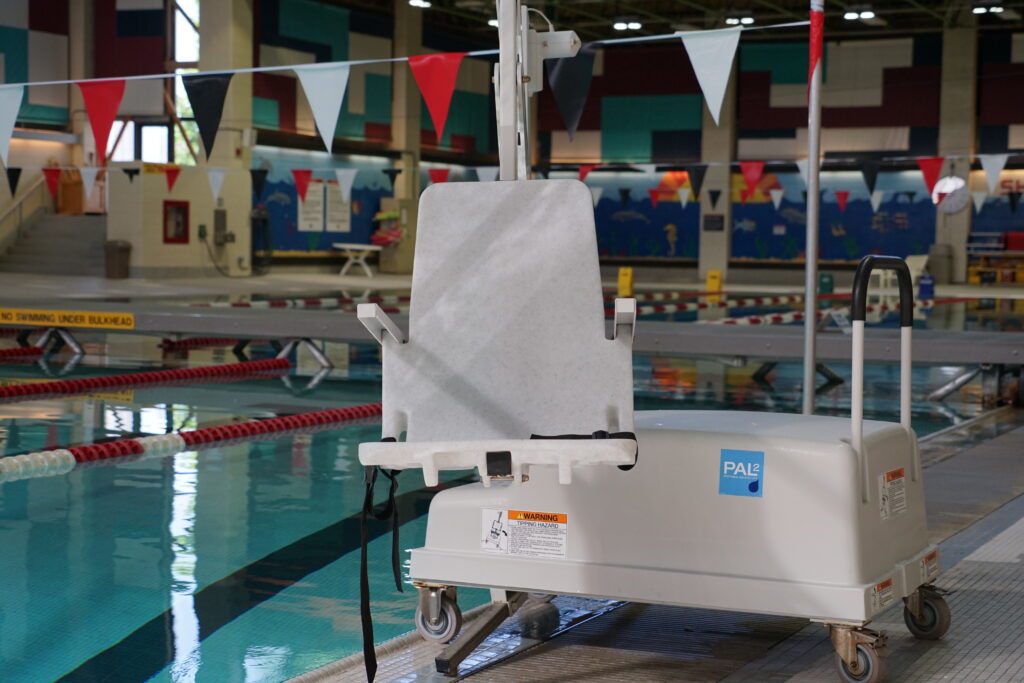
The DAF continues to support accessibility upgrades and retrofits across campus to this day. Recent DAF improvement projects include installing a Personalized Aquatic Lift (PAL) at the Carleton pool, adding safety barriers next to sloped walkways, constructing a ramp at the ice house and increasing the number of automatic door opening systems throughout campus buildings.
“It’s great to hear that after 35 years, the [Dedicated] Access Fund is still working,” says Anderson.
“Our hope was that we would set this up and the people who came after us would be able to use this to make change in ways that we never thought of — and it looks like it’s working. So, the system we built, the culture we built, is working as we hoped.”
Carleton’s culture of accessibility extended beyond campus and helped shape Anderson’s career path.
“I took law 100, but what really got me interested in law was my involvement with the students’ association and my accessibility advocacy, which all started at Carleton,” says Anderson.
After graduating from Carleton, Anderson completed a law degree at the University of Windsor. Despite the demanding workload of law school, he stayed connected to the accessibility community, joining the special needs student group and helping to set up a scholarship for students with disabilities.
Today, Anderson is a general counsel in the Department of Justice’s national litigation sector and works on complex cases mainly in the immigration law context that involve challenges to federal laws under the Constitution, including the Canadian Charter of Rights and Freedoms.
“The law is fascinating,” says Anderson. “It’s more than just immigration law that informs what I do — it’s constitutional law, it’s international law and how countries relate and work with one another. My work can be like a complicated jigsaw puzzle, getting all of the pieces to fit together.”
Throughout his career, Anderson has sought opportunities to continue his accessibility advocacy journey, often intersecting with his experience as a lawyer.
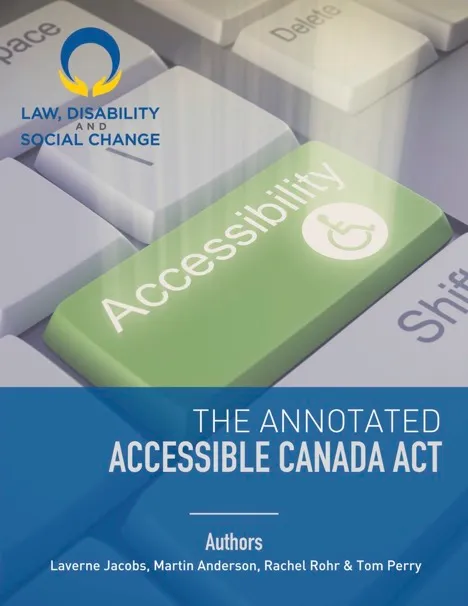
He currently serves as a member of the advisory board for the Law, Disability and Social Change Project (LDCP), based at the University of Windsor. In 2021, Anderson and a group at the LDCP collaborated to create the Annotated Accessible Canada Act, a resource to help people with disabilities, advocates and lawyers, as well as disability rights researchers and scholars, to interpret and examine the Act’s implications and their rights within it.
“When the Accessible Canada Act was passed, people like me were excited about how it could be used to enhance accessibility in areas of federal responsibility,” shares Anderson. “I thought maybe it would help lawyers if we wrote an annotation of the Act detailing how it works, what it means and how it could be used.”
Anderson acknowledges that while legislation like the Accessible Canada Act help increase awareness and highlight areas for action, there is still significant change and progress ahead — a sentiment that is reflected in Carleton’s own commitment to accessibility statement.
“We’ve come far but there’s still a lot of work to be done,” says Anderson.