Carleton alum reflects on architecture, leadership and giving back
Tommy Ong’s career in architecture has been shaped by a simple but lasting lesson from his time at Carleton: stay curious, challenge assumptions and never stop learning. As Principal and Senior Project Architect at HOK Canada, Ong (BARCH/01) has built a 25-year career leading complex and high-profile projects across Canada. As an alumnus, he hopes to give back to the community that helped launch his career and, over time, support the next generation of Carleton students.
Q&A with Tommy Ong (BARCH/01) – Principal & Senior Project Architect
Q: To start, tell us a little about your connection to Carleton — what did you study, when did you graduate, and what stands out most about your time at the university?
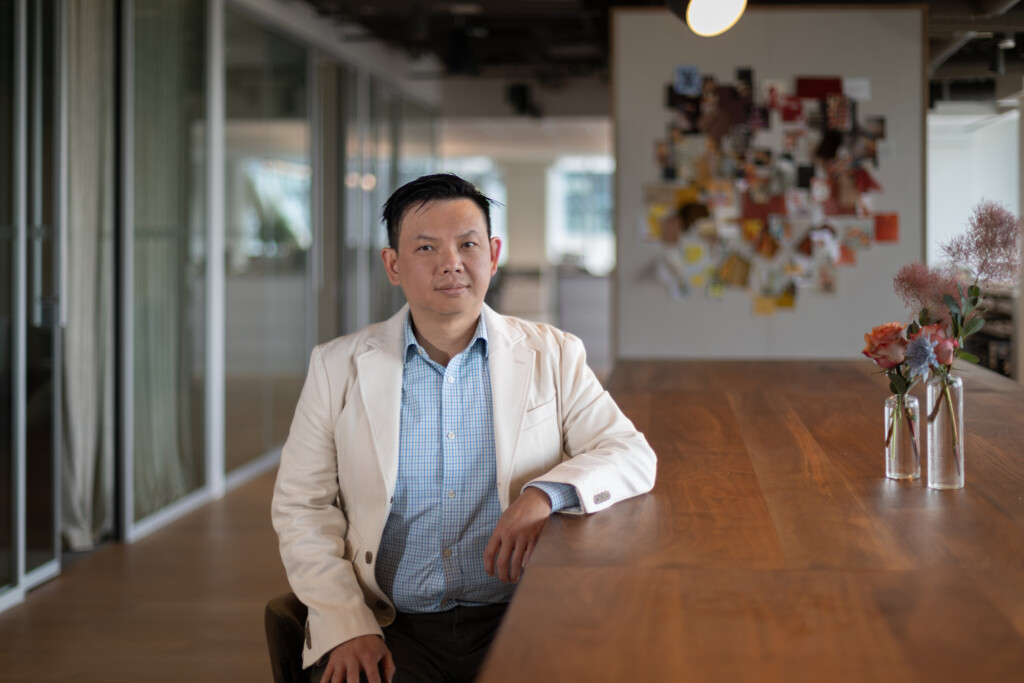
A: I graduated from Carleton in 2001 and I studied architecture. What stands out most to me about Carleton is its culture of curiosity, exploration, and critical thinking. The architecture program encouraged us to question conventional assumptions, explore different perspectives, and develop our own design philosophies rather than simply follow established ideas. I remember in my first or second year, we were asked to design a house. Initially, you think about bedrooms, a garage, kitchen, and all the standard functional spaces. But the professor challenged us to think beyond a checklist of rooms and instead rethink how architecture could shape human experiences, influence behaviours, and strengthen connections to the surrounding environment. That shift in thinking was eye-opening and completely changed how I understood architecture. You start thinking about human interaction, human spaces and experiences. You learned that a problem could have many different solutions and that you need to look at it from multiple perspectives.
Q: You’ve built an accomplished career since graduating. Can you tell us a bit about your career journey and some of the experiences or achievements that have been meaningful to you?
A: My career path wasn’t necessarily as flashy or glamorous compared to some of my classmates. Some went abroad and worked on iconic buildings in some of the world’s most dynamic cities. I chose a different path.
I spent the first 15 years of my career at Stantec Architecture, where I focused on honing my understanding and skills in the delivery of complex projects. I’m now with HOK Canada, where I specialize in the delivery of large-scale projects, with a particular focus on aviation and public sector work. Throughout my career, I’ve had the privilege of contributing to projects that serve millions of Canadians, including hospitals, forensic laboratories, airports and parliamentary facilities. For example, the Centre Block Rehabilitation is one of the most significant restoration and modernization of the country’s iconic parliamentary building. It is an incredibly complex and technically demanding project. I also had the opportunity to contribute to major aviation projects at Toronto Pearson International Airport, including work in Terminals 1 and 3, as well as upgrading to three parking garages.
HOK Canada has been incredibly supportive of my professional development, empowering me to take on greater responsibilities, pursue new opportunities, and lead increasingly complex projects. In doing so, it has helped me grow as both an architect and a leader. Today, one of the most rewarding aspects of my role is mentoring emerging architects and helping to develop the next generation of design professionals.
Q: How did your time at Carleton help prepare you for the career you’ve built? Were there particular experiences, people, or skills that have stayed with you?
A: I think the biggest thing Carleton gave me was a foundation that fundamentally changed the way I think about architecture, people, and the environments we create. It wasn’t about giving me a predefined set of knowledge. It was about teaching me how to think critically, approach complex problems, communicate ideas effectively, and work collaboratively with others. All our professors had their own unique ways of thinking about projects and challenges. Some were more conservative, some more challenging and some were way out there. We were exposed to all of those perspectives. That way of learning has stayed with me because that’s essentially how the real-world works. The constant exchange of ideas taught me how to defend a position, accept criticism with an open mind, and collaborate with others. Looking back, those experiences were excellent preparation for professional development, where success often depends less on having all the answers and more on critical thinking.
Q: For students and recent graduates who are just beginning their careers, what advice would you share with them that you wish you had known earlier in your own career?
A: If I look back at the last 25 years, I will say that a career is never defined by a single breakthrough moment. Rather, it’s a collection of hundreds, if not thousands, of smaller experiences, challenges, and relationships that gradually build into something meaningful.
My advice to students and graduates is simple: don’t to be afraid to take on challenges, even if they make you uncomfortable. Being uncomfortable is often connected to growth. Stay open-minded and don’t dismiss opportunities simply because they don’t appear flashy or glamorous. Be like a sponge and absorb whatever comes your way. Finally, be patient. Professional growth takes time and it’s important not to measure your success against someone else’s journey. Focus on your own development.
Q: As a Carleton graduate, what value do you see in staying connected with the university and its alumni community?
A: Remaining connected with other alumni is a big advantage. Throughout my career, I’ve bumped into many other Carleton alumni. In fact, the principal who hired me at HOK Canada, also studied at Carleton. When you start talking and realize, “I know that professor,” or “I know that person,” it immediately brings you back to those years. That’s the biggest advantage of the alumni community. There’s an immediate bond because you have that shared experience.
But for me, it isn’t only about looking back. I would love the opportunity to come back to my alma mater and contribute to the university that gave me so much. Whether that’s teaching the next generation of students, mentoring young professionals, or even helping to shape a future building on campus one day, I think that would be an amazing journey. The education I received at Carleton opened doors and provided the foundation upon which I built my career. To contribute back to the same university that helped launch my journey would truly bring things full circle. That’s something I would be honoured to do someday.